The 6C Framework: how to design a workshop that actually delivers
The methodology behind every activity in the Workshop Deck app.

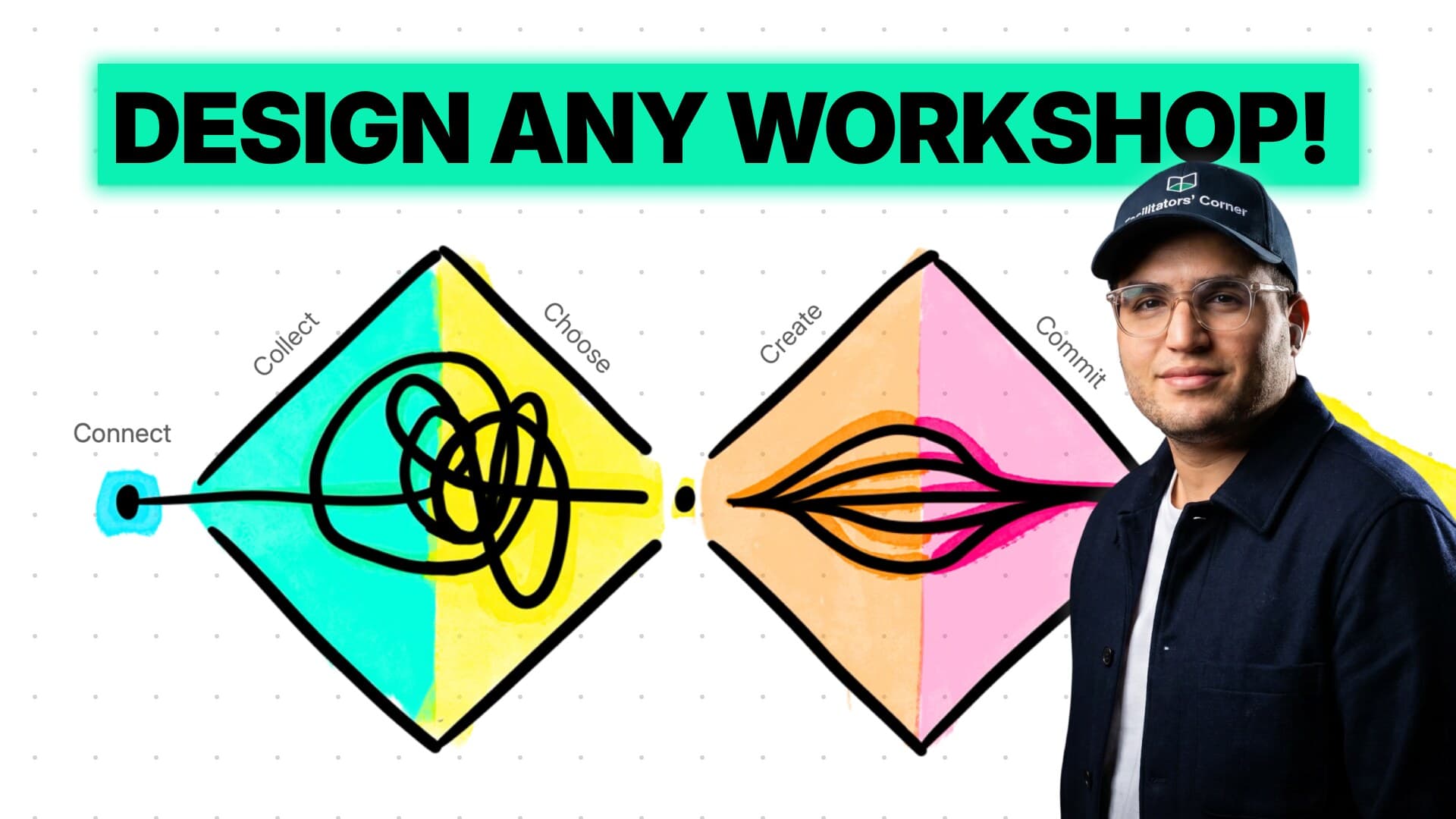
Most workshops fail before they begin.
Not because the topic is wrong. Not because the team isn't capable. But because the agenda was built backwards. Someone opened a blank Miro board, dropped in a brainstorm, added a few sticky notes, and called it a workshop.
The result? Two hours of good intentions and zero clarity on what happens next.
I've facilitated hundreds of sessions. And the single biggest shift I made was stopping to think about structure before I thought about activities. Not what am I going to run, but why am I running it, and in what order.
The 6C framework answered that question for me. And it answers the one I hear most from facilitators: I don't know where to start.
The framework
What is the 6C framework?
The 6C framework is a six-phase methodology for designing workshops that move groups from connection to commitment. It was originally developed by Aj&Smart as a four-phase model, then refined and expanded by the facilitation community into the version I use today.
Every workshop I design follows these six phases. Every activity inside the Workshop Deck app is mapped to one of them.
Watch the full explanation · Watch on YouTube →
Here's what each phase does.
The six phases
Connect
You don't open a workshop by diving into the content. You open it by bringing people into the room, mentally, not just physically.
A short icebreaker, or as I prefer to call it, a warm-up, does three things at once: it helps participants connect with each other, it helps them connect with you as their facilitator, and it gives you your first read of the room. Who's energized. Who's resistant. Who you'll need to draw out.
Skip this phase and you'll spend the next two hours trying to recover the energy you never built.
Collect
This is the phase most facilitators rush past on their way to the brainstorm. Don't.
Before a group can create anything useful, they need to align on the raw material: the challenges, the data, the context. The Collect phase is where you gather everything the group needs to engage meaningfully with the topic. It creates the connection between the participants and the problem.
And here's why skipping it is so costly: if your group hasn't collected the right information, they cannot create the right ideas. The quality of your brainstorm is a direct result of the quality of your Collect phase. Most facilitators wonder why the ideas feel thin. It's because they skipped this step.
Choose
You cannot work on everything. Neither can your participants.
The Choose phase is where the group decides what to focus on and what to set aside. It's the moment where the scope gets real. Where the energy stops spreading thin and starts concentrating on what matters most. I see companies skip this constantly, and the result is always the same: projects that are too complex, too broad, and too overwhelming to ever actually ship.
Choose is the phase that makes the rest of the workshop possible.
Create
Now you brainstorm.
This is the phase everyone wants to jump to first, and the reason the three phases before it exist. When you've connected the group, collected the right information, and chosen the right focus, the Create phase stops being a room full of people shouting ideas and starts being a group generating solutions that actually fit the problem.
Ideas, actions, prototypes, decisions. This is where they happen.
Commit
A workshop without a Commit phase is just a really expensive conversation.
This is the step I see facilitators skip most often, usually because they ran out of time. But without commitment, nothing you created in the session will survive the walk back to the office. The Commit phase is where next steps get named, owners get assigned, and the group leaves with clarity on what happens when the room empties.
This is the phase that turns a good workshop into a workshop that actually changes something. If the goal is action, not just alignment, Commit is non-negotiable.
If you want to be the facilitator people actually thank afterwards, this phase is why.
Celebrate
Finish on a high.
Participants move through a workshop activity by activity, and by the end they've lost the thread of everything they achieved. The Celebrate phase is your chance to hand it back to them. Remind the group what they built, what they decided, and what they're walking away with. Make them feel the weight of what they accomplished.
In a normal working environment, what a good workshop produces in two hours would take weeks. That's worth celebrating.
Workshop Deck App
The framework behind the app
The Workshop Deck app is built around the 6C framework. Every activity inside it is mapped to one of the six phases, so when you open the app to design a session, you're not staring at a list of 200 activities hoping something clicks. You move through the phases, pick the activities that fit your goal, and end up with an agenda that has real structure from opening to close.
The framework doesn't just give you a starting point. It protects you from the mistakes that quietly kill most workshops: skipping the Collect phase and wondering why the ideas are weak, rushing past Commit and wondering why nothing gets implemented, finishing without a Celebrate and leaving the group with no sense of what they actually achieved.
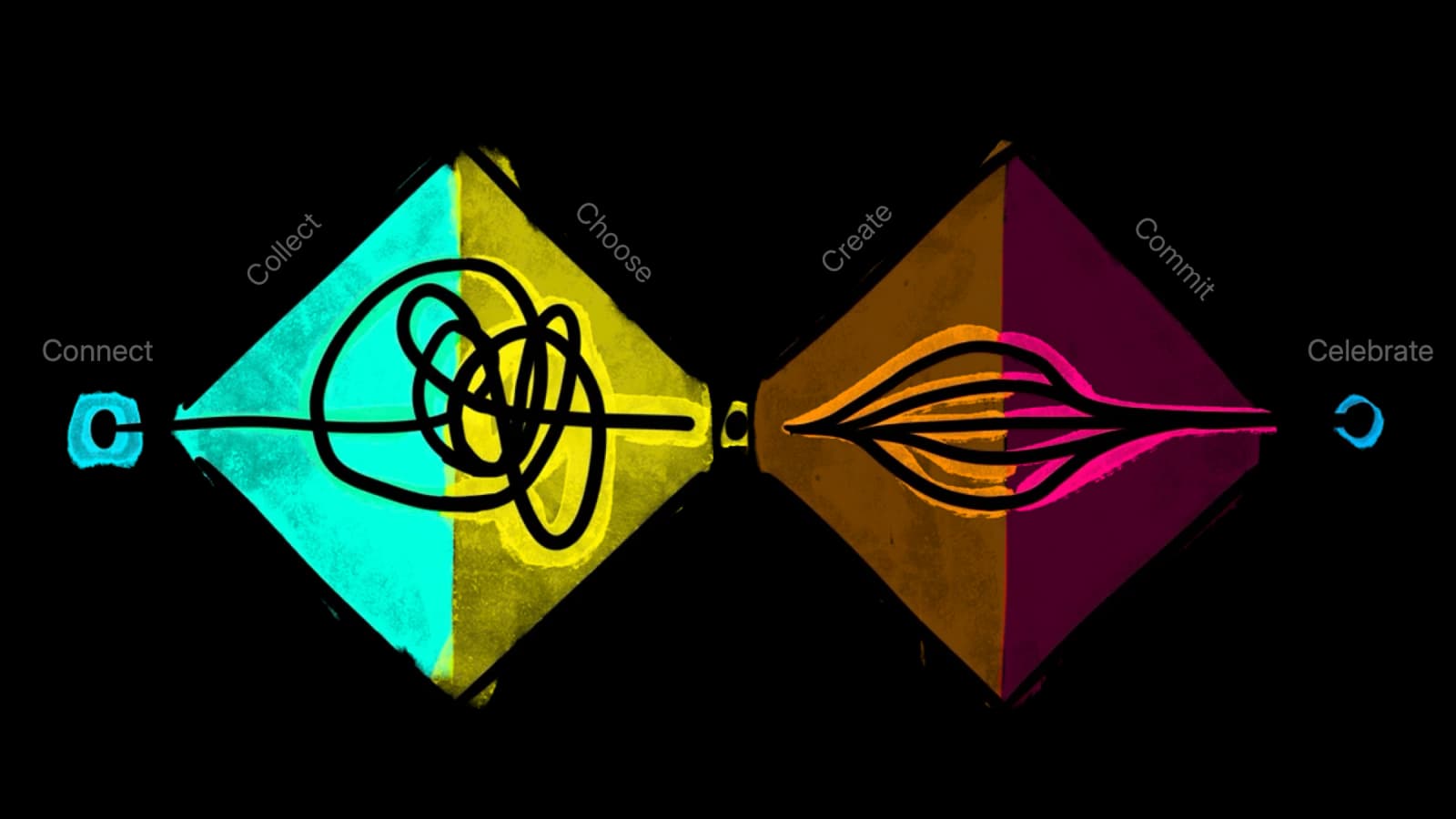
Connect. Collect. Choose. Create. Commit. Celebrate.
Six phases. One framework. Workshops that deliver.
Mehdi
P.S. The 6C framework didn’t come from a textbook. It came from thousands of hours in the room, running sessions that worked and sessions that didn’t. The app is the shortcut I wish I’d had at the beginning.